

 Sell 4 Free Real Estate





New Worm Screwworm & Indiana’s Updated Animal-Movement Requirements
The US Department of Agriculture’s announcement that New World screwworm (NWS) in the United States serves to remind Hoosiers to watch for unusual flies and/or maggots on livestock, poultry and pets.
While not currently found in Indiana, the insect pest could be carried into the state via people or animals that have visited an infested area or country. The Indiana State Board of Animal Health (BOAH) has been coordinating with the Indiana Department of Health and the Indiana Department of Natural Resources for more than a year to coordinate a response. The latest findings have triggered movement restrictions for animals traveling to Indiana from NWS-infested areas, currently in Texas and New Mexico.
Animal Movement Restrictions
Effective immediately, BOAH has adopted movement restrictions consistent with USDA’s NWS playbook to prevent entry of NWS into Indiana. Currently, these apply to all livestock and companion animals coming from an NWS Infested Zone. In addition to any requirements for leaving an infested zone imposed by USDA or the origin state, animals entering Indiana that originate in an NWS-infested zone must meet the following enhanced entry requirements (unless specifically exempted below):
· Be accompanied by an animal movement certificate (provided by state-of-origin) approved by the state-of-origin and BOAH prior to shipment.
· Be inspected by a USDA-accredited veterinarian within 5 days of departure and obtain a certificate of veterinary inspection (CVI) issued within 5 days of movement to Indiana.
· Be accompanied by a CVI documenting application of an effective treatment for NWS:
· Livestock and poultry species: applied within 14 days of movement unless going directly to slaughter.
· Cats and dogs: applied within 5 days of movement
Exceptions:
· Hatching and table eggs and chicks, poults, or ducklings younger than 5 days of age, or birds from National Poultry Improvement Plan (NPIP) certified flocks under Subparts B, C, D, G, H, I, or J of the program moving on a NPIP 9-3 form.
· Small mammals (such as hamsters, gerbils, Guinea pigs) and exotic birds that are bred, born, and housed indoors. Proactive treatment, if deemed appropriate by the accredited veterinarian and if safe to administer prior to movement, is encouraged but not required. (CVI required.)
· Swine from indoor-housed commercial swine farms moving within a valid Swine Production Health Plan (SPHP), if either of the following requirements is met:
· Inspected and found free of wounds within 5 days of movement; or
· Effective treatment applied within 14 days of movement, unless going directly to slaughter.
Indiana Animals Returning to Indiana:
· Animals leaving Indiana for exhibitions or other temporary movements may return to Indiana on the same CVI used for travel if:
· The CVI is still valid (less than 30 days) and
· The animal has not traveled into an infested zone.
Exhibition Requirements
Currently, BOAH has not changed exhibition requirements for fairs or open shows. All out-of-state entries must meet applicable interstate requirements. See section above for Indiana animals returning from an out-of-state exhibition.
Signs of NWS
Animal owners should observe their pets, livestock and poultry closely and contact their veterinarian upon noticing:
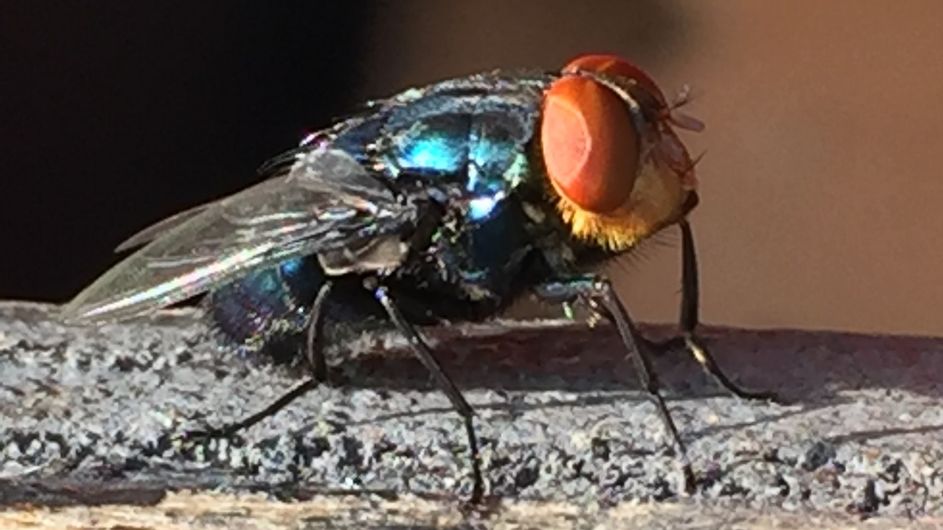
· Presence of unusual flies or maggots in or around open wounds/sores or body openings (nose, ears, navel, genitalia) of animals. NWS flies have orange eyes, a metallic blue or green body, and three dark stripes along their backs.
· Wounds that continue to drain or grow larger, often with the smell of decay.
· Animals showing discomfort, including head-shaking or irritated behavior.
Watching for signs is especially important after travel and exhibitions.
About NWS Treatment and Control
Attracted by the smell, NWS flies will lay eggs in open wounds on warm-blooded animals (or, rarely, humans). Within hours, the eggs hatch as worms that burrow in a screw-like pattern into the flesh to feed, causing the wound to expand and deepen.
Infestations should be treated by a veterinarian with specific FDA-approved medications labeled as effective on NWS. Some pesticides are labeled for NWS control.
USDA and Mexican animal health officials have been working diligently to halt the northward spread of NWS by introducing sterile flies to disrupt the breeding cycle—a program that was key to eradicating NWS from the United States in 1966. USDA has increased production of sterile flies in Texas to combat population growth.
Take Action
BOAH asks all Hoosiers to be proactive about watching for New World screwworm in Indiana:
· Inspect: pets, livestock and poultry for signs of NWS, such as draining or enlarging wounds or signs of discomfort, especially if an animal has been in a NWS-infested area. (Wildlife are also susceptible.)
· Report: suspicious wounds, maggots or infestations of possible NWS flies to your veterinarian or to BOAH via the online form.
· Protect: our animals by reporting possible NWS cases to BOAH.
More Information:
Information about NWS, Indiana’s and USDA’s response efforts, and how to report suspected cases is online at: www.in.gov/boah/.