


 Sell 4 Free Real Estate






AES Indiana Launches Nuclear Feasibility Study for Petersburg
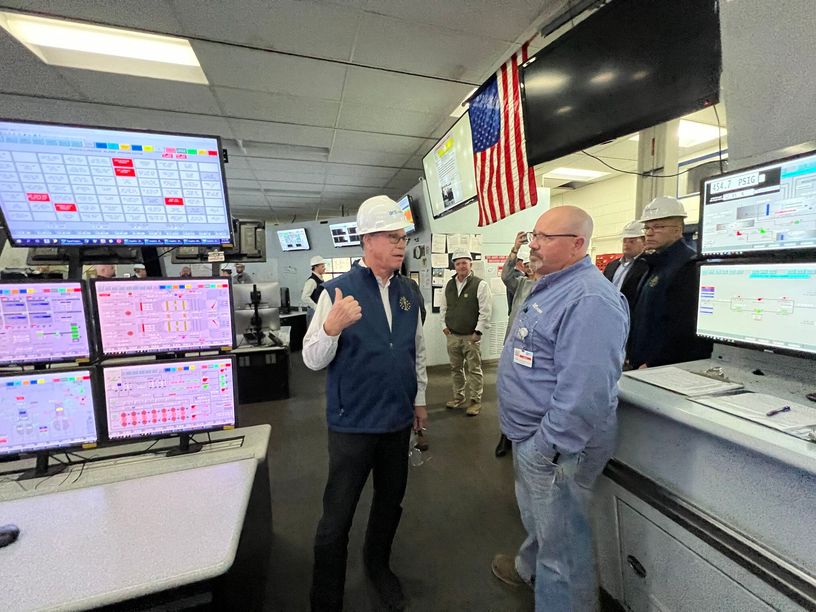
Two weeks ago, AES Indiana submitted its 2025 Integrated Resource Plan—a
20-year outlook that explores diverse generation options, including pathways to support large-scale
growth like data centers. It reflects their commitment to reliability, sustainability, and economic
development.
Last week, AES Indiana announced they are launching a nuclear feasibility study at their Petersburg and
Eagle Valley Generating Stations, in partnership with Advanced Nuclear Advisors. This study will help
evaluate the long-term potential of nuclear small modular reactors (SMRs) as a generation source to
drive investment, innovation, and job creation in Indiana.
AES Indiana also welcomed Indiana Governor Mike Braun to the Petersburg site, where he saw how AES
Indiana is investing in the future and powering what matters for Hoosiers in Central Indiana with
innovative technologies like natural gas and battery storage.
Pike County, Indiana is a very pro-business community, two months ago the Pike County Commission
unanimously passed a resolution to support the development of SMRs nuclear energy. Pike County
Commissioner, Mark Flint stated “This is an exciting time in the energy industry. Pike County is an
energy community and we are well-positioned to support the of SMRs nuclear energy developments.
We have the infrastructure, workforce, and the sites available to support a successful launch of SMRs
nuclear energy in our community. Nuclear SMRs energy developments would bring large capital
investments and create new, high-wage jobs in Pike County.”
The energy landscape is evolving—and AES Indiana is planning ahead to ensure Indiana is ready to lead.
What is Small Modular Reactors (SMRs)?
What is Small Modular Reactors (SMRs)?
According to the U.S. Department of Energy, Advanced Small Modular Reactors (SMRs) are a key part
of the Department’s goal to develop safe, clean, and affordable nuclear power options. The advanced
SMRs currently under development in the United States represent a variety of sizes, technology options,
capabilities, and deployment scenarios. These advanced reactors, envisioned to vary in size from tens of
megawatts up to hundreds of megawatts, can be used for power generation, process heat, desalination,
or other industrial uses. SMR designs may employ light water as a coolant or other non-light water
coolants such as a gas, liquid metal, or molten salt.
Advanced SMRs offer many advantages, such as relatively small physical footprints, reduced capital
investment, ability to be sited in locations not possible for larger nuclear plants, and provisions for
incremental power additions. SMRs also offer distinct safeguards, security and nonproliferation
advantages.